FSW APPLICATION

Heat Sinks Welded by FSW

Improve flatness and reduce manufacturing costs with a single-pass welding process.
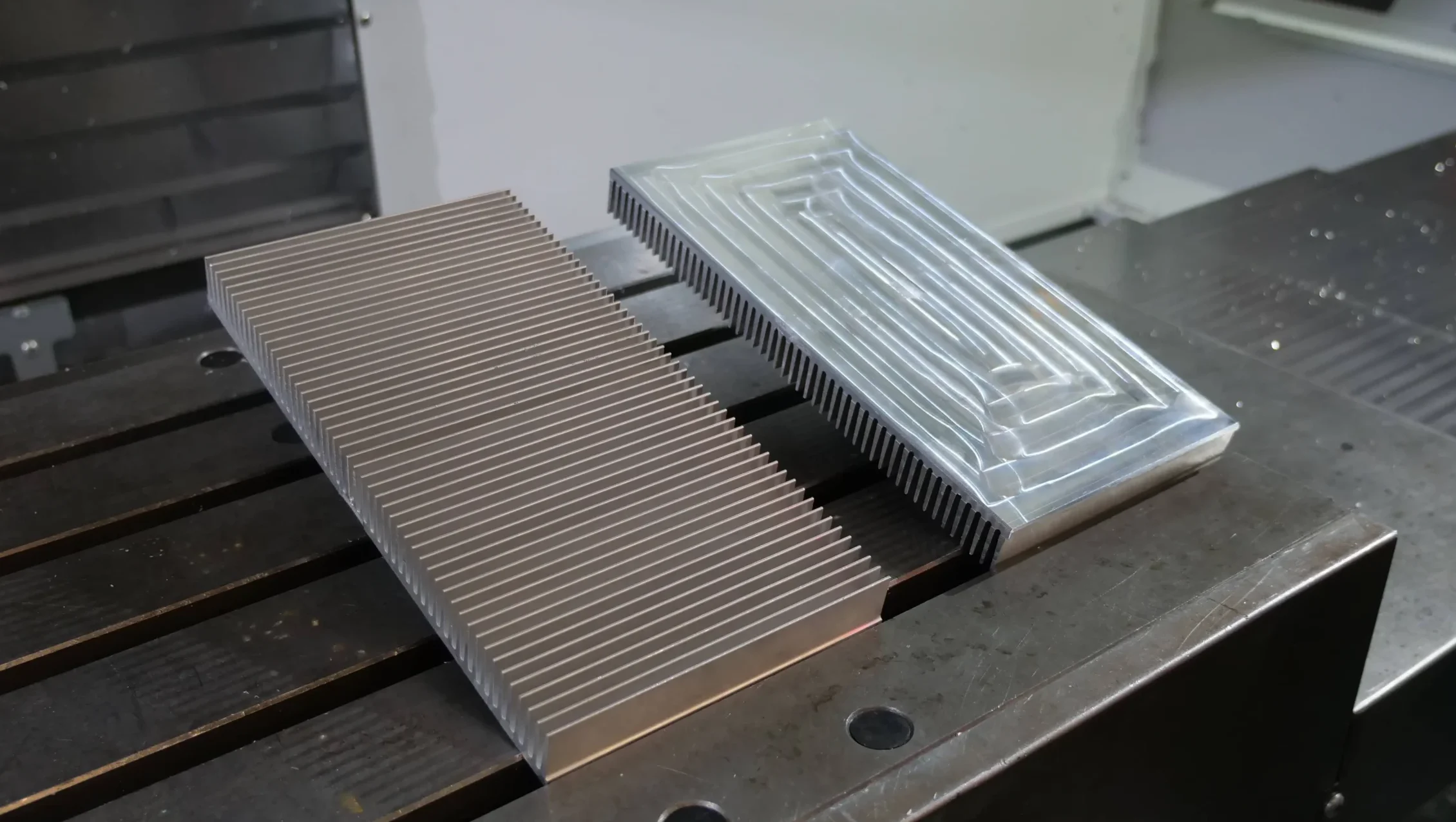
heat sinks assembled by FSW

Why choose Friction Stir Welding for your heat sink assembly?

Aluminium heat sinks are manufactured from extruded sections, which need to be joined together by welding to produce wider heat sink assemblies. Their thick base sections, typically requiring 6 to 12 mm of weld penetration, make the assembly particularly challenging with conventional fusion welding.

While MIG/TIG requires multiple welding passes, FSW achieves the required penetration in a single pass. This results in better flatness, porosity-free welds, a repeatable automated process and significantly lower consumable costs.

perfect flatness in heat sinks

Up to 20x better flatness

Reduce welding deformation by 10 to 20 times compared with multipass MIG/TIG welding.

improved sealing in heat sinks

Improved sealing

Achieve high quality, porosity-free welds, eliminating a key source of defects for reliable sealing in heat sink assemblies.

fsw cold plate

Automated welding

Reduce reliance on skilled manual welders with a consistent and repeatable automated process.

FSW chill plate

Lower welding costs

Cut consumable costs by up to 10x, from around 1€/m per MIG/TIG pass to 0,10€/m with FSW.

Technical Specifications of FSW-Welded Heat Sinks
thermal straps welding

The flat base of an aluminium heat sink needs to be thick enough for extrusion and for electronic components to be mounted onto it. As a result, heat sink assembly typically requires 6 to 12 mm of weld penetration.

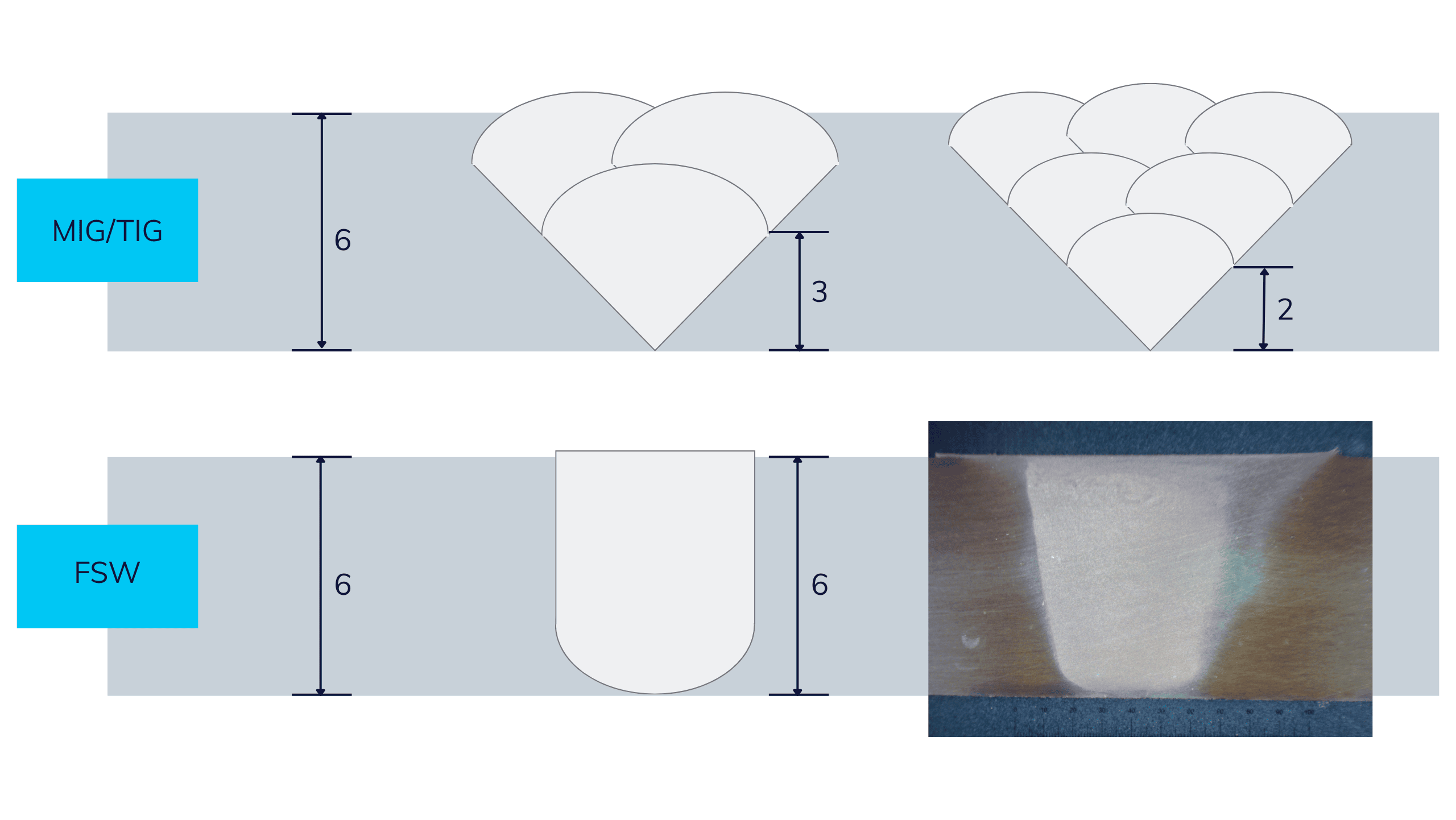
FSW can achieve this penetration in a single pass with straight edges. As illustrated for a 6 mm section, MIG/TIG requires multiple passes depending on the penetration achieved per pass. For thicker sections, up to 12 mm, this can increase to 4 to 6 passes.

By replacing multipass welding with a single FSW pass, manufacturers can eliminate edge preparation and beveling, while limiting welding deformation and reducing the risk of defects associated with multiple passes. Fewer weld defects and the absence of porosity with FSW also contribute to more reliable sealing, a key requirement for heat sink assemblies.

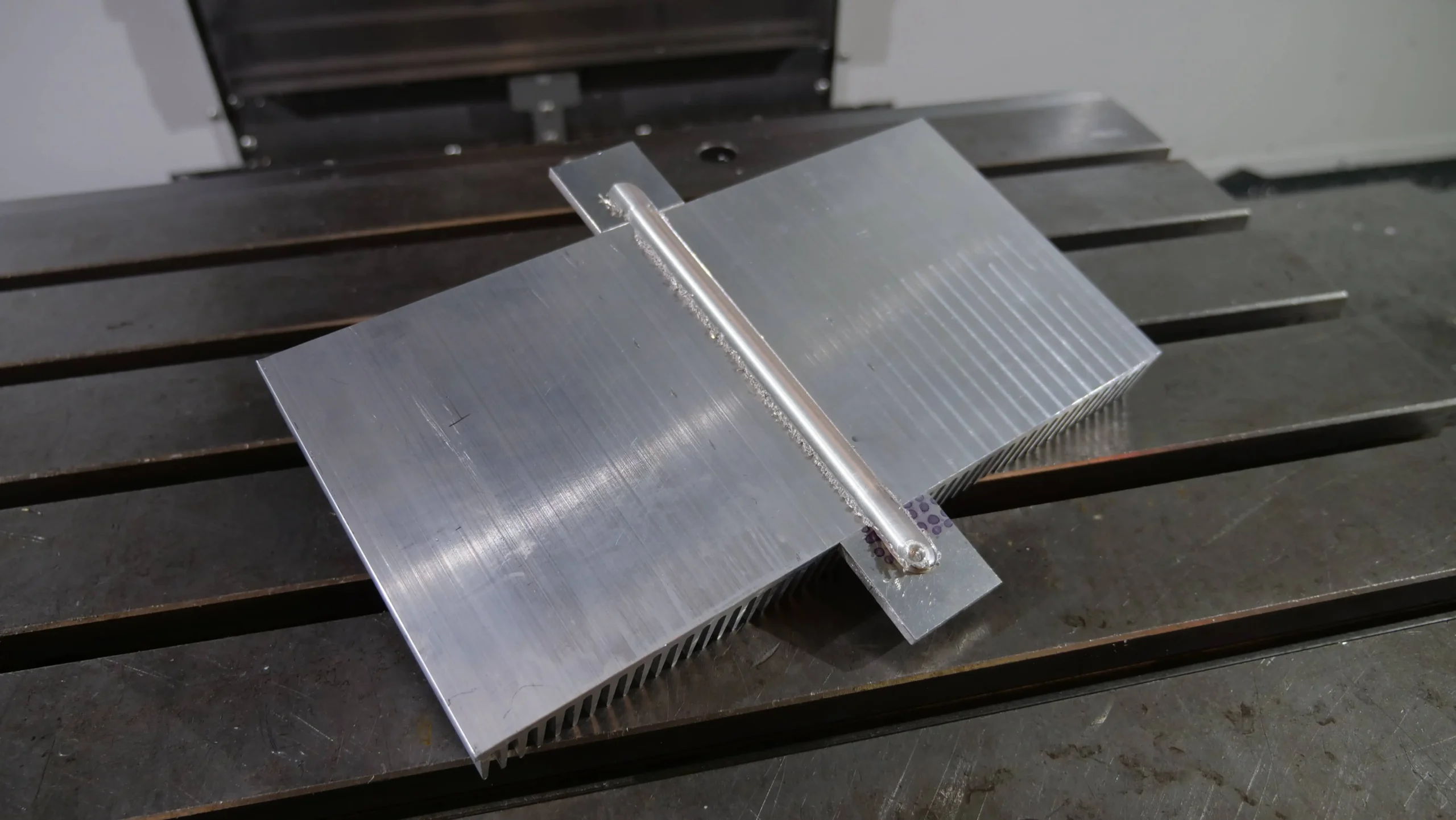
For heat sinks requiring complete sealing, run-in and run-out areas are used to start and finish the FSW weld outside the final part. Starting or stopping directly at the edge of the heat sink would leave an unwelded area, creating a potential sealing defect.

The run-in and run-out ensure that the entire length of the heat sink is properly welded. After welding, these additional sections are removed during the machining operation used to achieve the final dimensions and flatness of the heat sink.

heat sink welded by FSW with run-in and run-out
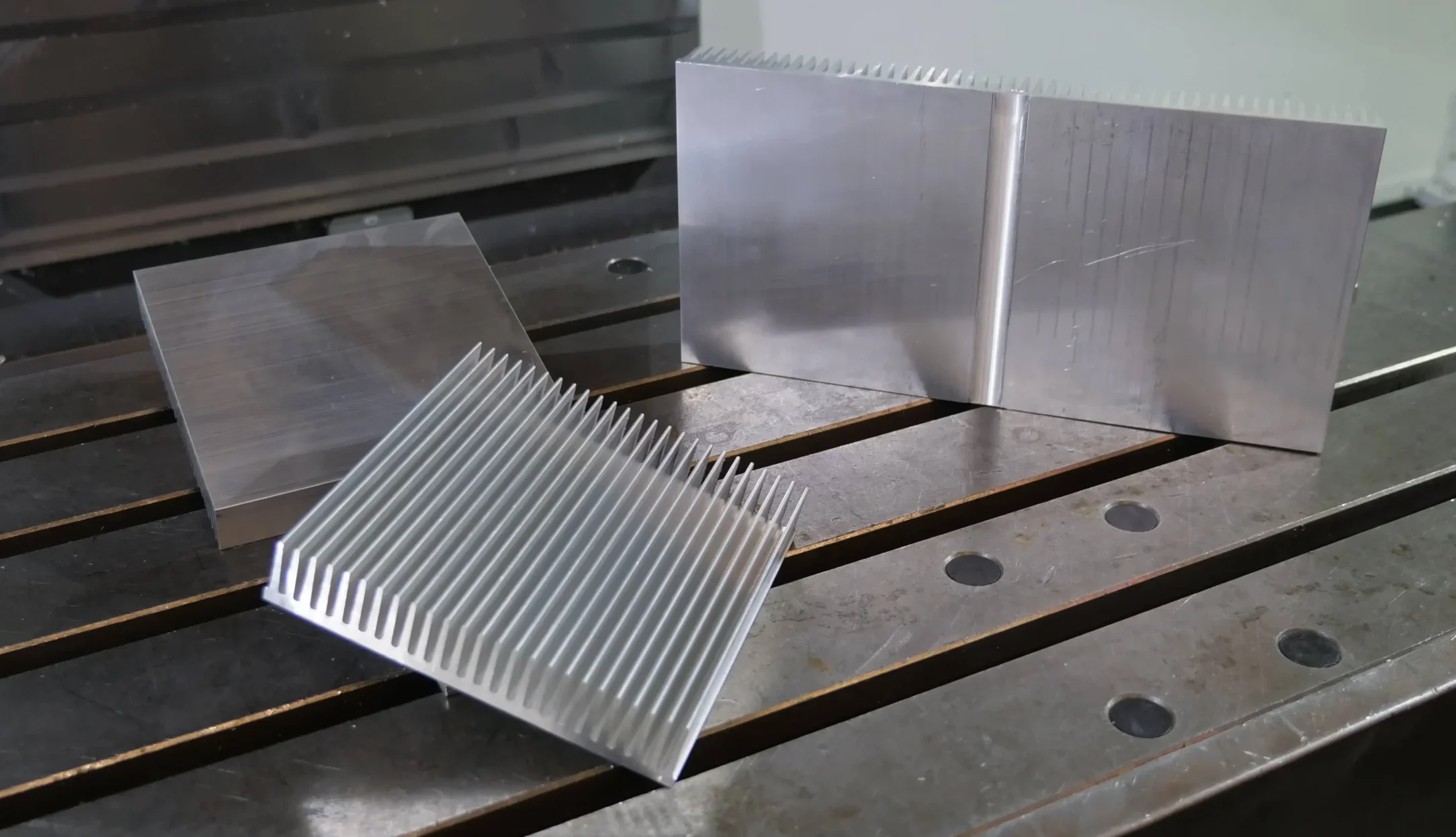
heat sink: final part after friction stir welding

Heat sinks require very high flatness to ensure proper contact with the electronic components to be cooled. A typical requirement is 0,1 mm per meter, or just 0,05 mm for a 0.5-meter heat sink.

Post-weld machining is therefore still required with FSW to achieve the specified final flatness. However, the amount of deformation before machining is significantly lower than with conventional fusion welding. For a 0,5-meter heat sink, an FSW-welded assembly can show around 0,5 mm of flatness deviation, while MIG welding can result in approximately 5 mm.

With MIG/TIG, this higher deformation requires the heat sink to be straightened before machining, followed by more extensive machining to restore the required flat surface. With FSW, the lower deformation simplifies these post-welding operations and reduces the amount of material that needs to be machined.

Thermal conductivity pads can then compensate for small remaining flatness deviations between the heat sink and the electronic components, limiting insulating air gaps between the contact surfaces.

Weld and machine on the same CNC

With the Stirweld FSW head integrated directly into your CNC, you can perform the heat sink welding and subsequent machining operations on the same machine. This simplifies the manufacturing workflow, from FSW assembly to the final machining required to achieve the specified flatness.

See Friction Stir Welding Applied to Heat Sinks in Real-Time
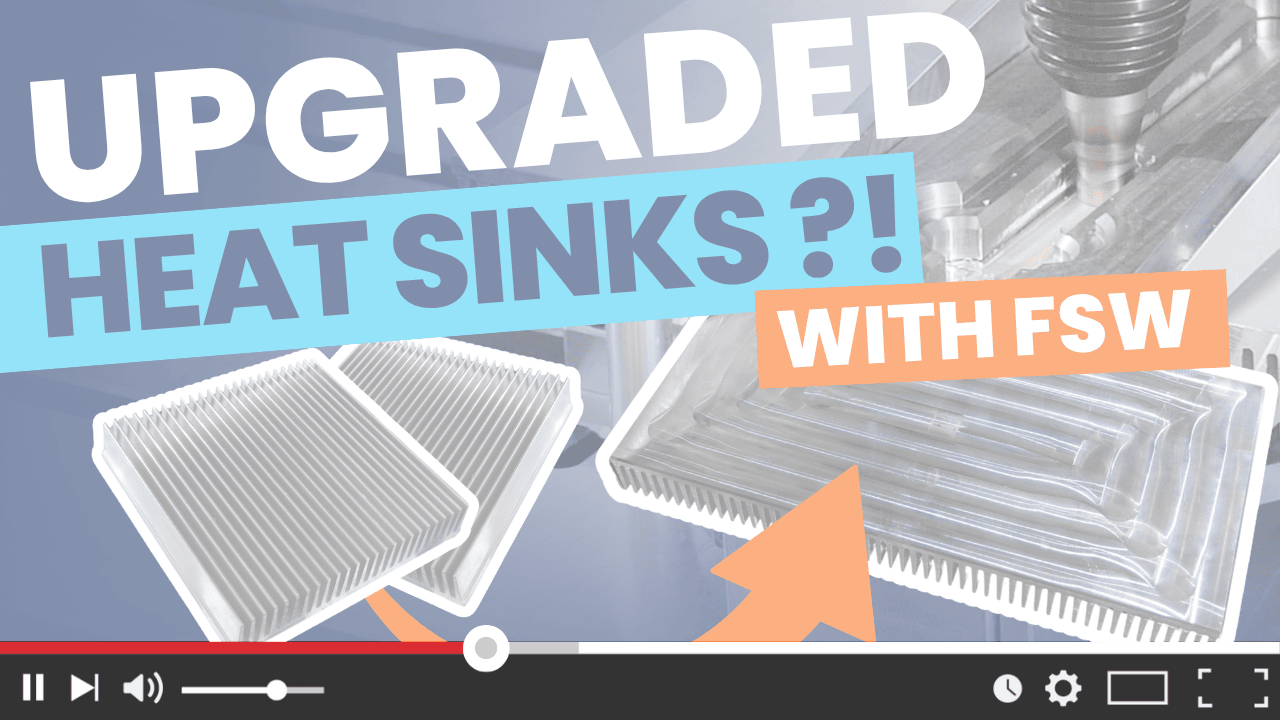
video showing the friction stir welding of heat sinks

Comparing FSW to Traditional Heat Sinks Assembly Technique

Friction Stir Welding vs. TIG and MIG

  • Flatness: FSW significantly limits welding deformation compared with TIG/MIG. For heat sinks requiring 6 to 12 mm weld penetration, replacing multiple TIG/MIG passes with a single FSW pass can reduce deformation by up to 20 times, helping preserve the flatness of the assembly.
  • Sealing: TIG/MIG welding can generate porosity, particularly when multiple passes are required. FSW produces porosity-free welds, improving sealing reliability, an important requirement for heat sink assemblies.
  • Weld penetration: FSW can weld 6 to 12 mm in a single pass, while TIG/MIG typically requires 2 to 3 passes for 6 mm and 4 to 6 passes for 12 mm. Fewer passes also mean less deformation and a lower risk of weld defects.
  • Weld preparation: TIG/MIG requires edge preparation and beveling before multipass welding. FSW welds straight edges directly, eliminating this preparation step and simplifying the manufacturing process.
  • Health & safety: Conventional TIG/MIG welding involves smoke, shielding gases and electrical risks. FSW provides a safer working environment and also avoids the chemical cleaning of aluminium required before conventional fusion welding.
  • Consumable cost: FSW uses the welding tool as its consumable, representing approximately €0.10 per welded meter. TIG/MIG requires shielding gas and filler wire, resulting in a consumable cost of approximately €1 per meter for each welding pass.
friction stir welding versus fusion welding for heat sinks assembly

Heat Sinks: Key Applications Across Industries

Heat sinks provide a simple and cost-effective solution for passive cooling across a wide range of industries. Made primarily from extruded aluminium, they dissipate heat from electronic components without requiring a liquid cooling circuit, making them particularly suitable for applications where simplicity and reliability are key.

battery tray energy

Defense

Passive cooling for defense electronics, including radar systems requiring reliable heat dissipation.

battery tray automotive

Energy

Passive cooling for power electronics and energy applications, providing a simple and reliable solution without the need for liquid cooling circuits.

battery tray aeronautics

Railway

Aluminium heat sinks for passive cooling of electronic equipment in railway applications.

battery tray aeronautics

Shipbuilding

Passive air cooling for electronic equipment used across shipbuilding applications.

friction stir welding in telecommunications sector

Telecommunications

Heat sinks provide passive air cooling for telecommunications equipment, including 5G antenna applications and electronic components.

Learn More: Explore FSW Technology

Interested in finding out more about friction-stir welding technology? Explore our technical resources to understand the FSW process, key welding parameters, quality control methods and the steps required for successful industrial implementation.

Webinar – 45 min – Replay on demand

FSW, From Fundamentals to Industrial Integration

Gain a clear understanding of Friction Stir Welding, from process fundamentals to industrial integration. Learn how to design, control and implement FSW in production, with expert insights from Stirweld and a guest contribution from TWI.

Blog articles – 5 min

How to define my Friction Stir Welding parameters?

Quality control of Friction Stir Welding

White paper – 20 min

Friction Stir Welding for dummies

Get a clear and accessible introduction to Friction Stir Welding, from its basic principles to its main benefits and industrial applications. An ideal starting point for anyone discovering FSW technology.
guide to understanding FSW technology

White paper – 20 min

Discover the key steps to successfully implement Friction Stir Welding, from defining your project requirements and welding parameters to achieving a reliable and qualified production process.
thermal management - FSW liquid cold plate

Ready to improve your heat sink manufacturing process?

Improve flatness, simplify your welding process and reduce production costs with a single-pass FSW solution for aluminium heat sinks.