



FSW APPLICATION

Coils Welded by FSW

Join aluminium and copper coils with strong, leak-tight welds for continuous production.
Coil joining with friction stir welding

Why choose Friction Stir Welding for your coil assembly?

Friction Stir Welding (FSW) offers a reliable solution for joining aluminium and copper coils, ensuring production continuity, high mechanical strength and leak-tight welds. It also enables the manufacturing of longer coils and dissimilar aluminium-copper assemblies.

minimize material waste with FSW

Minimize material waste

Join consecutive coils to reduce material losses at the beginning and end of each coil.

prevent weld breakage with FSW

Prevent weld breakage

High-strength FSW joints withstand plastic deformation during continuous stamping.

FSW leak-tight joints

Ensure leak-tight joints

Solid-state welding eliminates fusion-related porosity risks for reliable sealing.
aluminum and copper welding with FSW

Join aluminium and copper

Create bimetallic coils by welding aluminium and copper strips along their length.

Technical Specifications of FSW-Welded Coils
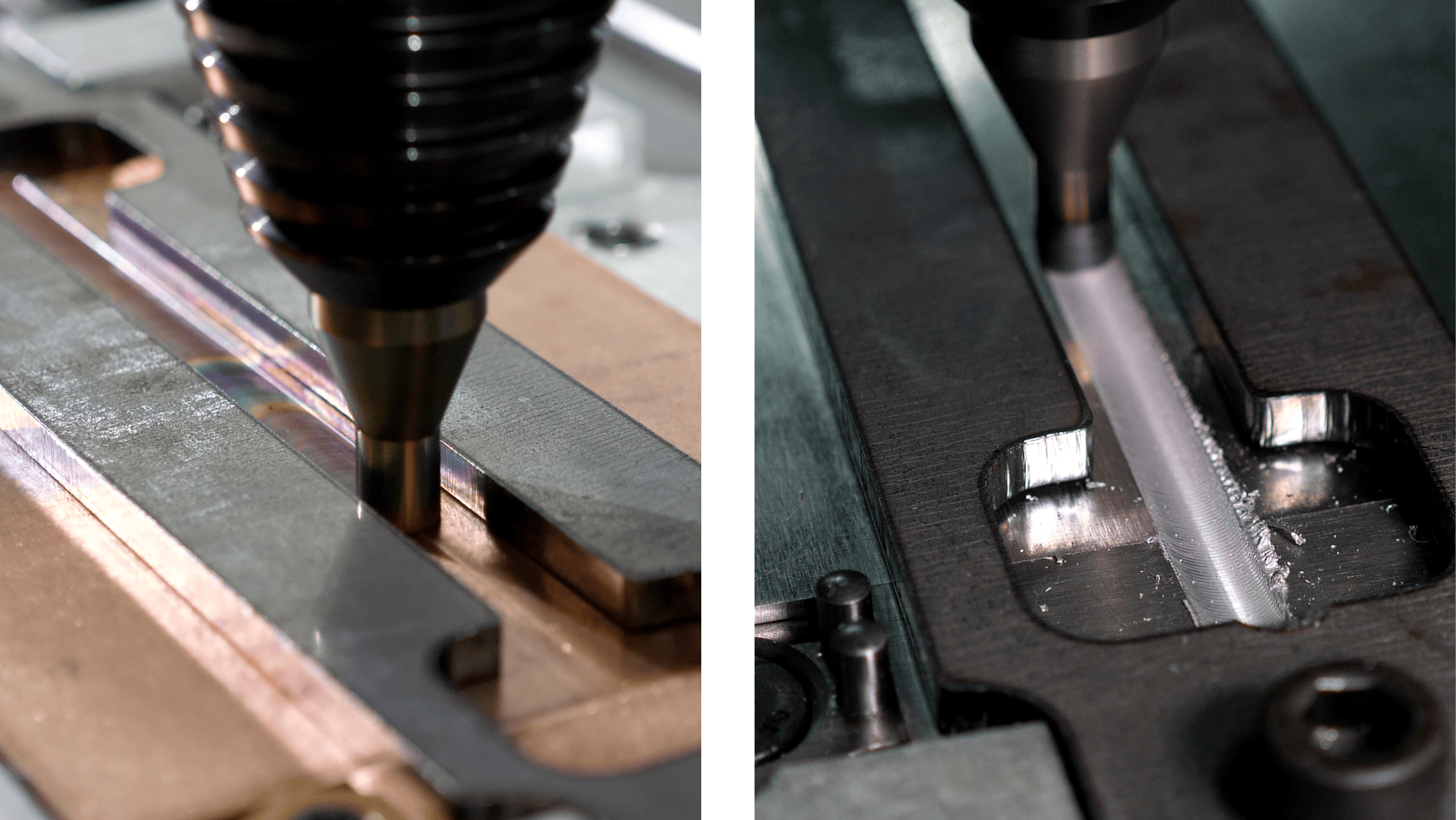
aluminum and copper friction stir welding

Coil joining mainly involves thin metal strips, typically around 1 mm thick. Friction Stir Welding (FSW) can weld coils from a minimum thickness of 1 mm, making it suitable for these thin-sheet applications.

The maximum thickness is primarily determined by the material’s ability to be rolled into a coil. Above approximately 3 to 4 mm, metal strips generally become too thick to be wound.

FSW can achieve welding speeds of up to 4 m/min, allowing consecutive coils to be joined quickly before production resumes. This is particularly important in continuous stamping lines, where joining operations must be completed efficiently to minimize interruptions.

The process therefore combines thin-sheet welding capability with high welding speeds for coil-to-coil assembly.

Friction Stir Welding enables the joining of aluminium and copper coils in different configurations, depending on the final application.

For continuous production lines, two consecutive coils are joined end-to-end with a transverse weld, perpendicular to the strip’s travel direction. This allows the material to continue feeding the production line and reduces losses at the beginning and end of each coil.

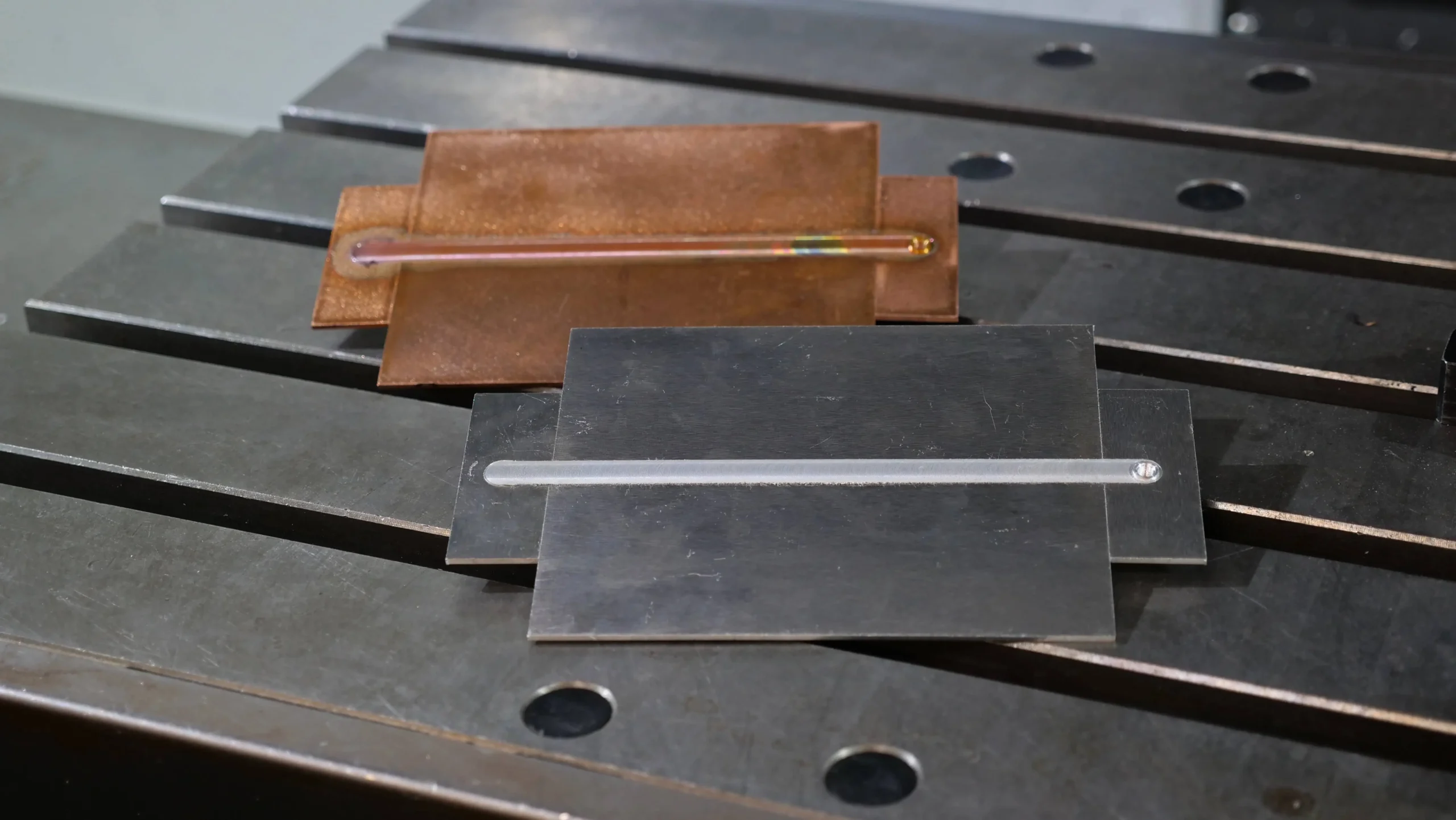
FSW also enables longitudinal welding, parallel to the coil direction, to combine aluminium and copper strips into a single bimetallic coil. This configuration can be used to manufacture components such as aluminium-copper busbars through continuous stamping.

Both configurations expand the possibilities for coil manufacturers and users.

coil joining with friction stir welding - proof of concept
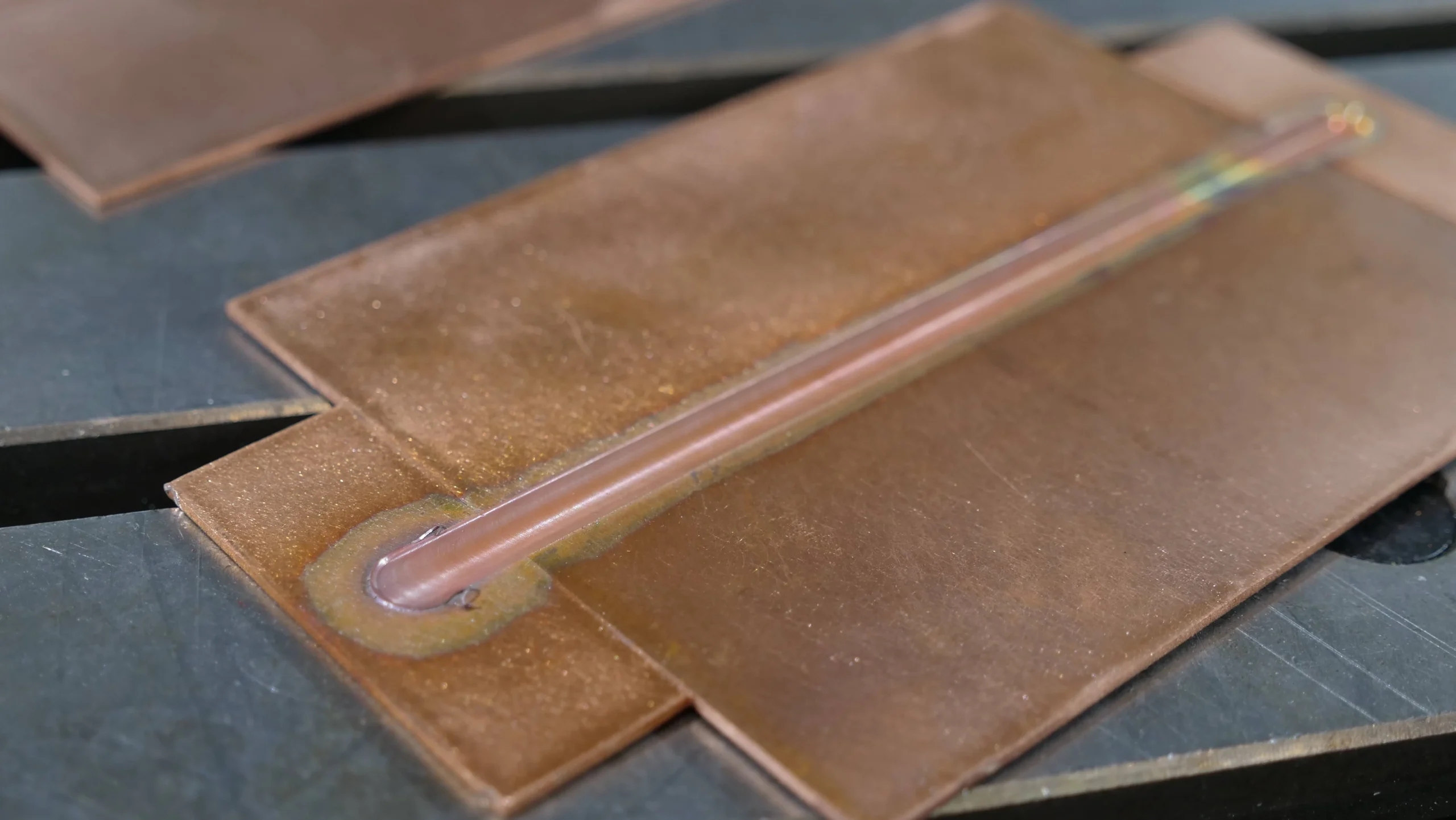
copper coil welded using FSW

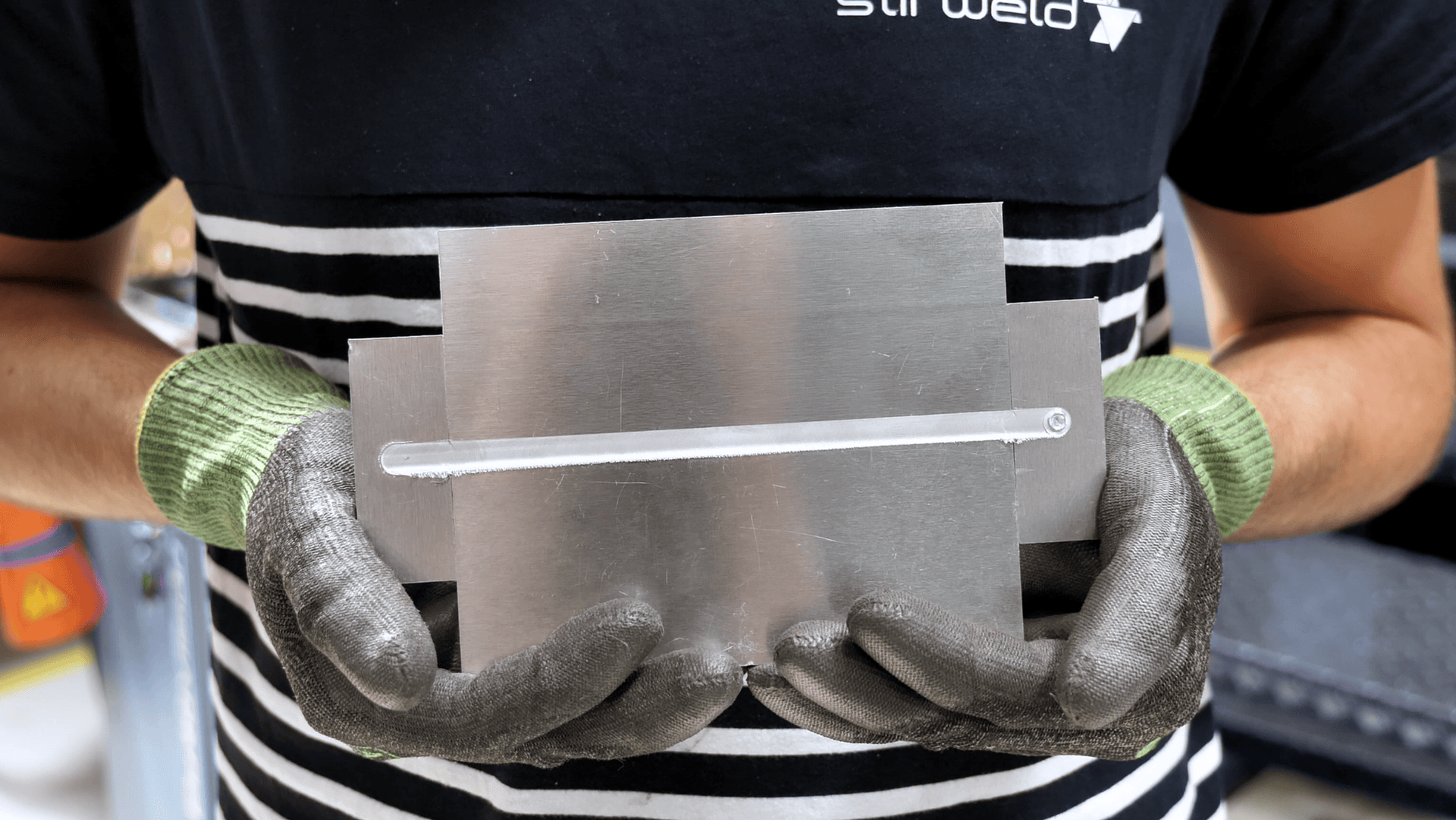
Coil joining requires a weld covering 100% of the strip width. To achieve this, FSW uses run-in and run-out extensions that allow the welding tool to enter and exit outside the functional coil. These temporary extensions are removed after welding.

Thin coils have low rigidity and may deform slightly despite proper clamping. This can create a small gap between the strip and the run-in or run-out, potentially causing defects at the coil edges after machining. To secure these critical areas, two additional short welds can be performed along the coil direction, near the run-in and run-out junctions. These welds improve material mixing and reduce the risk of edge defects. Each additional weld takes approximately three seconds, providing an extra safeguard alongside appropriate tooling design.

Coils used in continuous stamping undergo significant plastic deformation as the metal strip passes through forming presses. The welded joint must withstand these operations without cracking or tearing, ensuring that production can continue reliably.

FSW provides high mechanical strength and good formability, making it suitable for applications where the welded strip must be subsequently shaped into finished components.

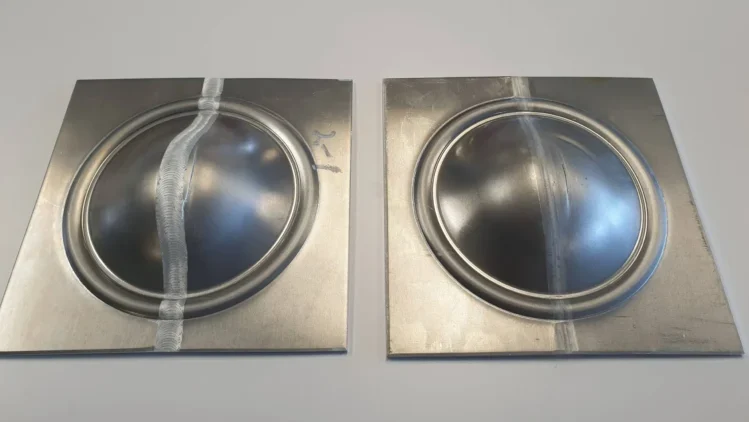
Weld formability can be verified through standardized Dome Tests. During these tests, the welded sheet undergoes controlled plastic deformation to evaluate its resistance to cracking. For the test to be successful, no cracks must appear in the weld. This demonstrates that the welded joint is stronger than the base material under the tested conditions.

dome test after Friction stir welding

See Friction Stir Welding Applied to Coil Joining in Real-Time
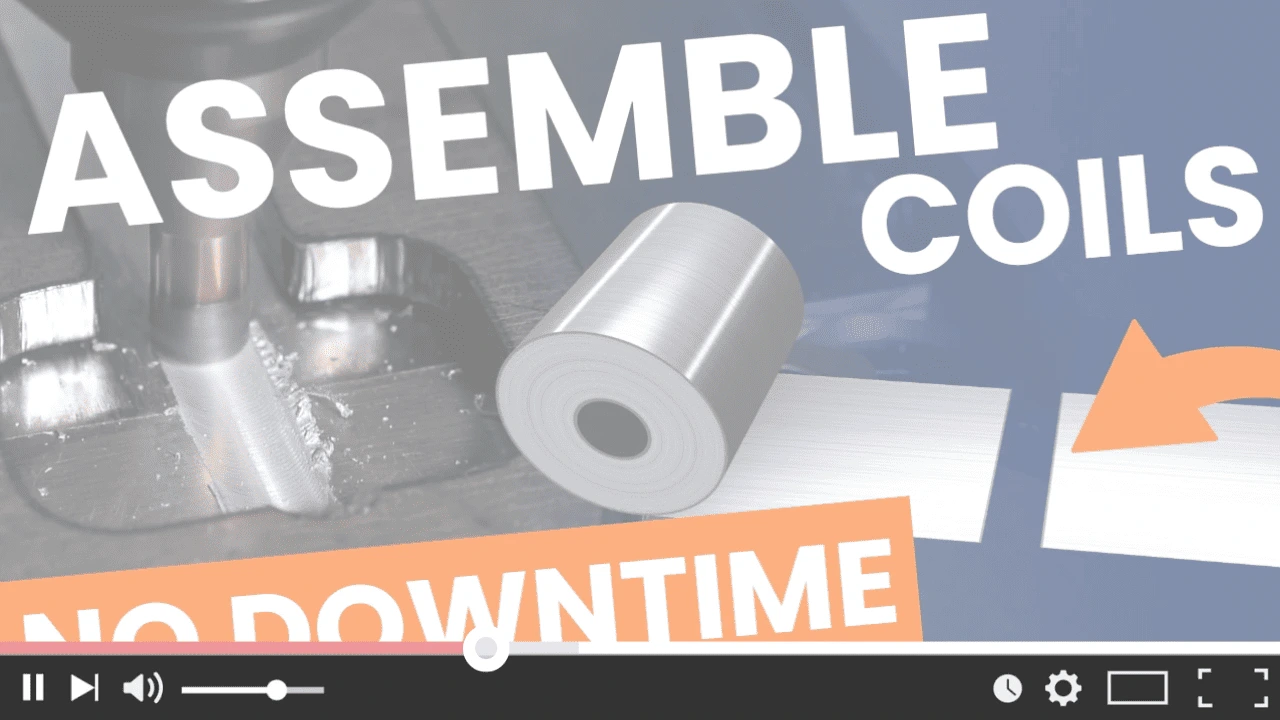
video showing the friction stir welding of coil joining

Comparing FSW to Traditional Coil Joining Technique

Friction Stir Welding vs. TIG
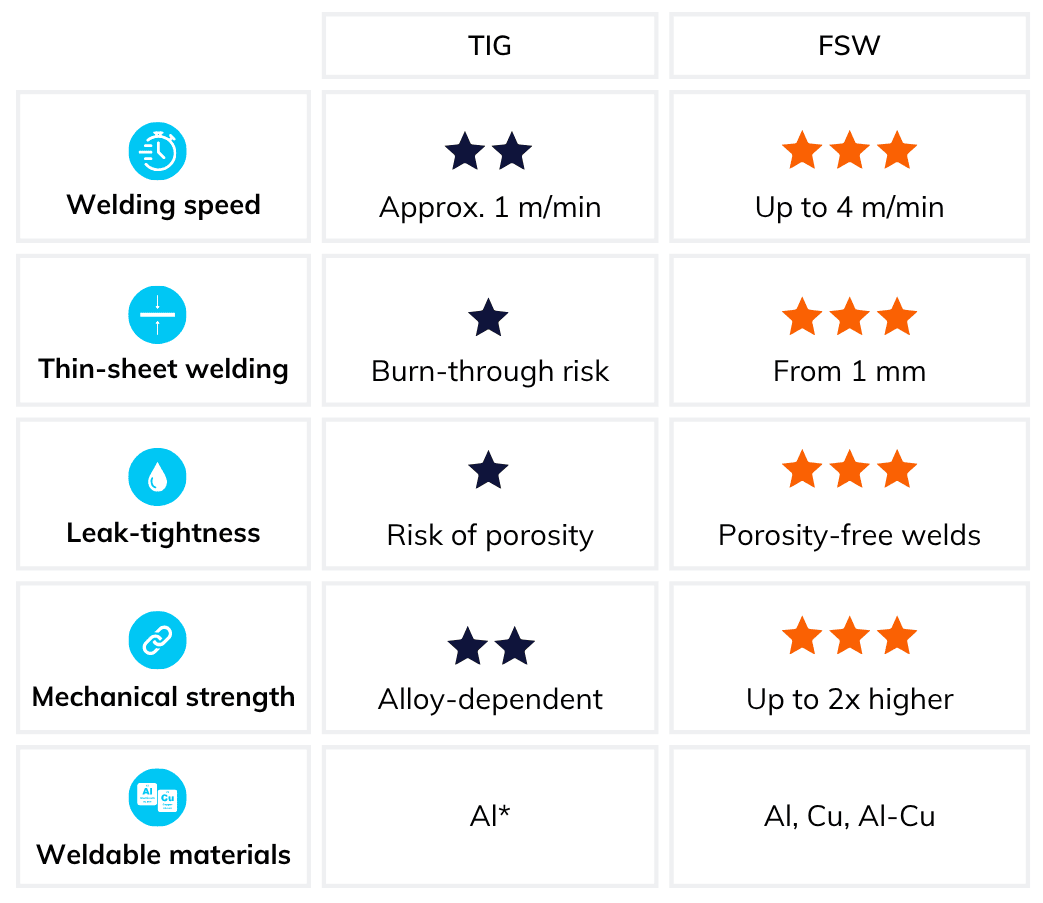
  • Faster welding: FSW reaches speeds of up to 4 m/min, compared to approximately 1 m/min with TIG, reducing coil joining cycle times.
  • Thin-sheet welding: FSW reliably welds coils from 1 mm thickness, while TIG requires precise parameter control and minimal gaps to prevent burn-through defects.
  • Reliable sealing: As a solid-state welding process, FSW joins materials without melting them, preventing the porosity associated with fusion welding.
  • Higher mechanical strength: FSW joints can achieve up to twice the mechanical strength of TIG welds, allowing them to withstand the plastic deformation required in continuous stamping.
  • Greater material versatility: FSW joins aluminium, copper and dissimilar aluminium-copper combinations, enabling the production of bimetallic coils.
friction stir welding versus TIG for coil joining

*The TIG comparison refers to conventional aluminium coil joining applications discussed in this study. TIG is not limited to welding aluminium, but aluminium-copper joining is not achievable through conventional fusion welding in the applications considered.

Coil Joining: Key Applications Across Industries

FSW coil joining supports continuous manufacturing processes across multiple industries. From metal stamping to submarine cable production, it enables longer aluminium and copper strips, reliable welds and the production of bimetallic coils for electrical applications.


battery tray energy

Automotive

Continuous stamping of small metal parts

battery tray automotive

Energy

Aluminium-copper coils for electrical applications

battery tray aeronautics

Data Centers

Bimetallic coils for electrical busbar production

battery tray aeronautics

Railway

Continuous stamping of metal components

friction stir welding in telecommunications sector

Telecommunications

Metallic protection for submarine communication cables

Learn More: Explore FSW Technology

Interested in finding out more about friction-stir welding technology? Explore our technical resources to understand the FSW process, key welding parameters, quality control methods and the steps required for successful industrial implementation.

Webinar – 45 min – Replay on demand

FSW, From Fundamentals to Industrial Integration

Gain a clear understanding of Friction Stir Welding, from process fundamentals to industrial integration. Learn how to design, control and implement FSW in production, with expert insights from Stirweld and a guest contribution from TWI.

Blog articles – 5 min

How to define my Friction Stir Welding parameters?

Quality control of Friction Stir Welding

White paper – 20 min

Friction Stir Welding for dummies

Get a clear and accessible introduction to Friction Stir Welding, from its basic principles to its main benefits and industrial applications. An ideal starting point for anyone discovering FSW technology.
guide to understanding FSW technology

White paper – 20 min

Discover the key steps to successfully implement Friction Stir Welding, from defining your project requirements and welding parameters to achieving a reliable and qualified production process.
thermal management - FSW liquid cold plate

Ready to optimize your coil joining process?

Discover how Stirweld’s FSW solutions can help you achieve stronger, leak-tight welds, reduce production interruptions and join aluminium and copper coils.